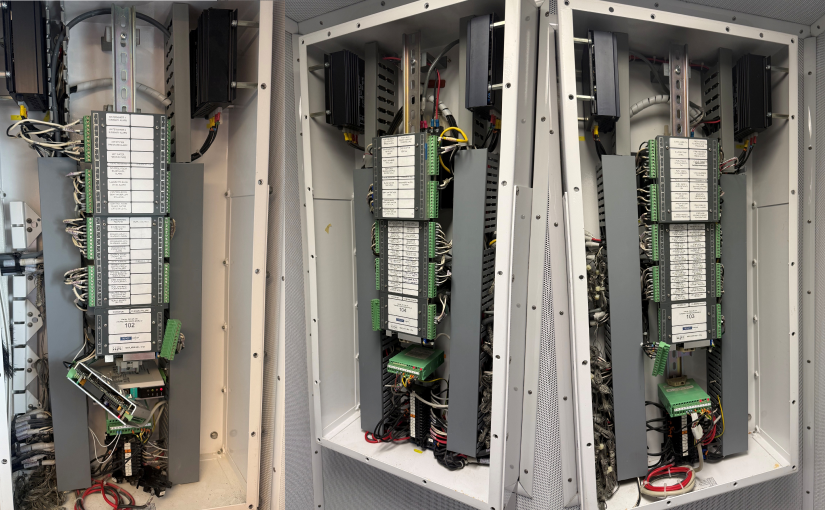


When you open a TESS-built panel, it’s immediately clear that the system was built to be understood and serviced — not just to function.
At TESS, we standardize on MIL-spec tinned copper wire for critical marine electrical installations. This is not a requirement; it is a deliberate choice to set a higher baseline for long-term reliability and serviceability.
MIL-spec wire is often misunderstood. It is not softer or more flexible than conventional marine wire. In fact, it is typically stiffer, due to its conductor construction and high-temperature insulation systems. That stiffness is intentional. It allows wiring to hold its shape, maintain clean routing, and remain exactly where it was designed to be over time.
One of the key advantages of MIL-spec wire is thermal performance. Because these insulation systems are rated for higher continuous operating temperatures, they provide greater thermal margin at a given current level. In many cases, this allows equivalent electrical performance with a smaller overall conductor diameter, resulting in less crowded wire ducting, improved airflow, and panels that remain workable as systems evolve.
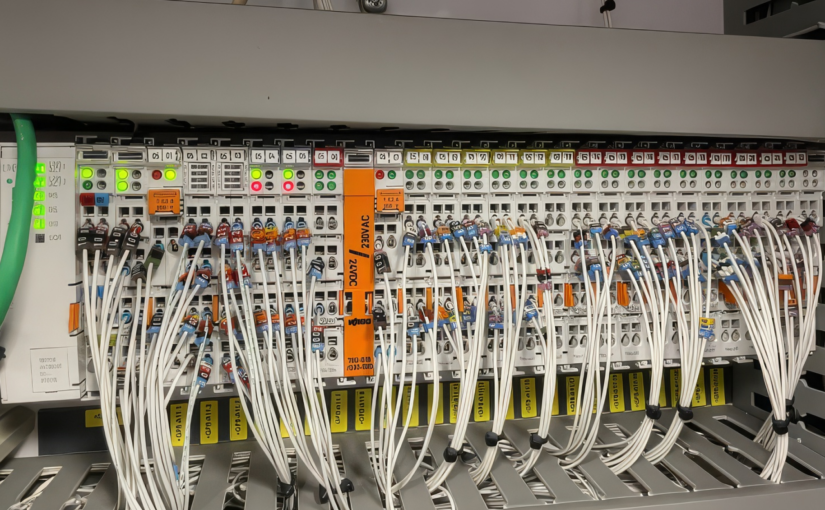
In practice, this translates into control panels that stay readable and organized years after delivery. Conductors do not sag into ducts, bundles remain disciplined, and individual wires can be traced without disturbing adjacent circuits. Fault-finding becomes verification rather than investigation.
Material choice alone is not enough. Every conductor TESS installs is labeled using professional Legrand wire markers, referenced directly to our electrical drawings. What appears in the panel matches the documentation exactly, eliminating ambiguity and reducing troubleshooting time — even for technicians who were not involved in the original installation.
For captains and chief engineers, this approach delivers systems that remain predictable and consistent over the life of the vessel. Panels open the same way years later as they did at handover, documentation aligns with reality, and maintenance decisions can be made calmly and deliberately.
This is what building to a higher standard looks like — not just on delivery day, but throughout the vessel’s operational life.