

In this case, the installation of two stern thrusters significantly increased maneuvering load, effectively doubling peak electrical demand from approximately 200 kW to 400 kW. While the upgrade improved handling, it exposed limitations in the vessel’s power management behavior under dynamic load conditions.
During maneuvering and load transitions, generator synchronization times occasionally exceeded acceptable limits, load sharing between auxiliary generators became unstable and oscillatory, sudden load release could momentarily drive one generator into reverse power, and generator speed response differed between otherwise identical units.
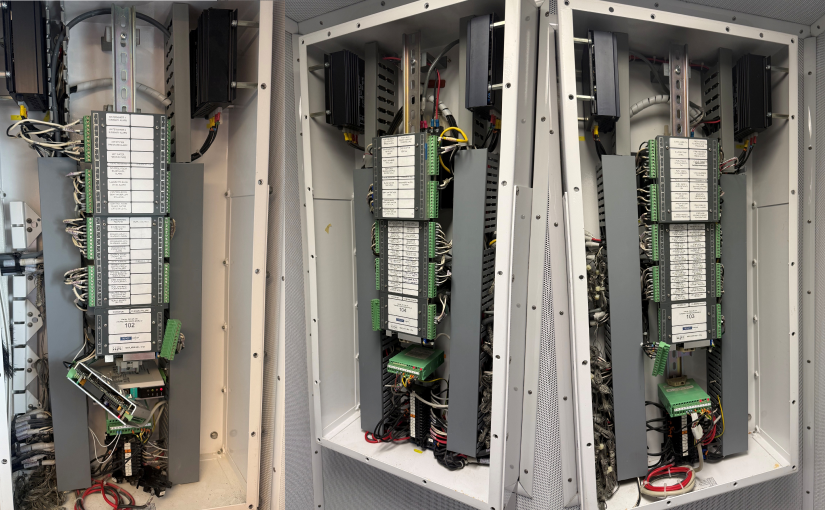
TESS analyzed the auxiliary generator control strategy, focusing on DEIF PPM-3 controllers. The system was operating in droop mode using pulse-based RPM corrections. Under fast and heavy load changes, this method lacked the accuracy and response time required.
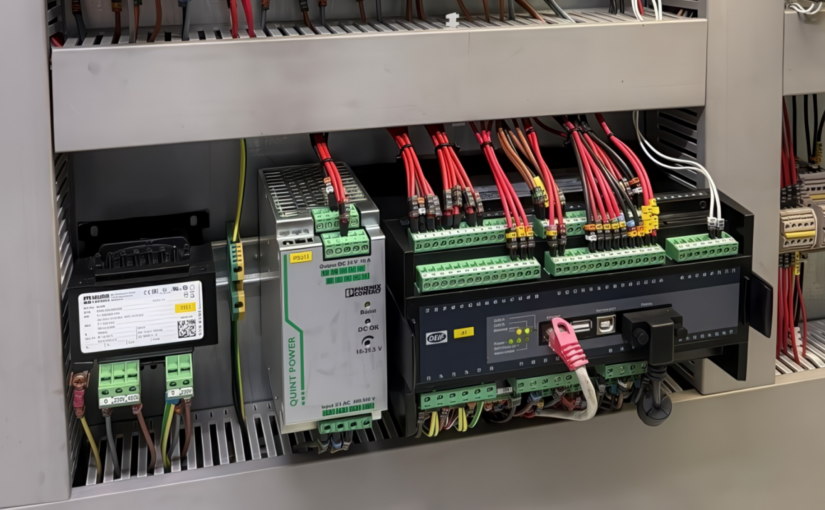
To address this, TESS converted auxiliary generator speed control from droop to isochronous mode, replaced pulse-based commands with standard 4–20 mA analog speed control, and installed isolation signal converters together with DEIF EPQ electronic potentiometers. The EPQ potentiometers provide a critical fail-safe: if a PPM-3 were ever unavailable, the generators can still be started, run, and manually speed-controlled, maintaining operational capability.
This project was completed in close cooperation with Certified Diesel Engine Corp, supporting ECM tuning and generator response optimization, and Island Marine Electric , assisting with DEIF PPM-3 parts supply and PID fine-tuning during extended component lead times. Temporary mitigation measures ensured the vessel remained fully operational until all components were installed.
After commissioning, generator synchronization stabilized, load sharing became smooth and predictable, and maneuvering reliability was fully restored under higher electrical demand.
This project reinforces an important lesson: successful power management is about control accuracy, redundancy, and real-world behavior under load — not just installed kilowatts.