
Think about how many times you’ve changed your mobile phone in the last 20 years.
Not because the old one stopped working — but because technology moved forward. Faster processing, better data, better insight, better efficiency. The device evolved to support how you work today, not how you worked a decade ago.
Marine automation systems are no different.
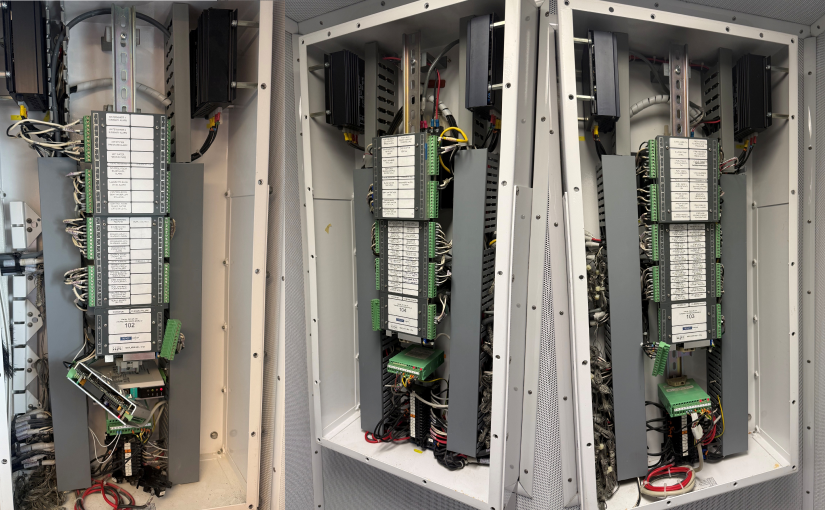
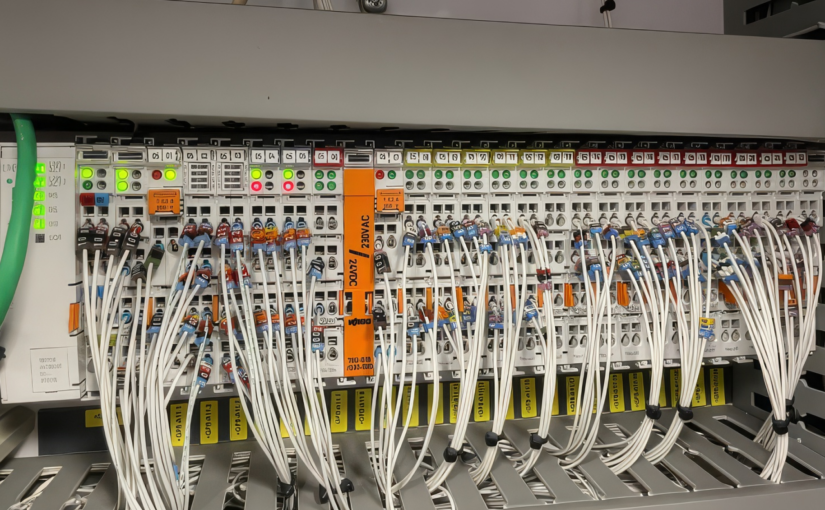
A superyacht is a long-term asset. The hull, engines, and major machinery are expected to last decades. But the control and automation layer sits in a different category. It lives in the world of software, processing speed, data handling, and control algorithms — all of which evolve continuously.
Treating automation systems as something that should remain unchanged for 20–25 years ignores how much progress happens underneath the surface.
Evolution Is Not the Same as Forced Replacement
There is an important distinction to make.
Replacing a system because parts are unavailable or knowledge is lost is a failure of continuity. Upgrading a system because better tools exist is progress.
A power management system installed ten years ago may still function correctly — but that does not mean it performs optimally by today’s standards.
Control philosophies evolve. Processing power increases. Control loops become faster and more precise.
A droop-based generator control strategy from ten years ago behaves very differently than a modern system capable of fast, stable isochronous control. Improved response times alone can translate into smoother load transitions, reduced generator stress, and measurable fuel efficiency gains during dynamic operations.
Data, Visibility, and Decision-Making
Logging and trending are another clear example.
Ten years ago, many systems offered limited or rudimentary data storage. Trending was minimal. Preventive insight was largely reactive — alarms told you when something had already gone wrong.
Today, logging depth, resolution, and accessibility have improved dramatically. Systems can trend behavior over time, identify deviations earlier, and support condition-based maintenance rather than calendar-based intervention.
Looking ahead ten years, the next shift is already visible.
With AI-assisted analytics entering automation platforms, we are moving toward systems that don’t just report data, but interpret it. Predictive views, anomaly detection, and optimization strategies will increasingly influence how generators, loads, and safety systems are managed.
An automation system frozen in time cannot participate in that future — even if it still technically “works.”
The Real Question Owners Should Ask
The discussion should not be framed as replace everything versus never touch it.
The real question is: Can your automation platform evolve while preserving continuity?
That means:
- Retaining infrastructure where possible
- Preserving IP, documentation, and logic
- Supporting staged, partial upgrades
- Allowing owners to improve performance without unnecessary disruption
This is where integrators, not just manufacturers, play a critical role.
Building for Continuity, Not Obsolescence
At TESS, the goal has never been to push owners into premature refits. It has been to ensure that systems can be understood, supported, and evolved over time.
That may mean keeping a system exactly as it is. It may also mean selectively upgrading parts of it — not because the old system failed, but because the vessel, the operation, and the expectations have moved forward.
Longevity in marine automation isn’t about standing still. It’s about having the freedom to move forward deliberately, when it makes sense.
That is how technology should serve long-life assets.